
Transparency Before God (Respecting Privacy)
Surely He Knows What is in the Chests (A Contemplation on Sura 11 verse 5)

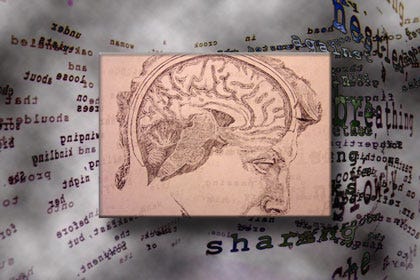
Note: This started as a straightforward look at a brief verse on ill-intentioned people who conceal their animosity by putting on an external facade. But, as inevitably happens when following overlapping linkages and congruencies between Qur’anic verses, it soon expanded to a conspectus on the transparency of existence and the place of individual privacy — and if and how these are balanced out in the Qur’an.
—
Bismillah al-Rahman al-Rahim
“They fold up their chests that they may conceal (their enmity) from Him; now surely, when they use their garments (outward tricks and deceptions) as a covering, He knows what they conceal and what they make public; surely He knows what is in the chests.” (Qur'an 11:5)
This verse addresses hypocrites and, in general, any who harbor secret hostilities; who seek, through veiled words and actions and through insinuation and suggestion, to undermine the weight of revelation, and by extension, the authority of the Prophet (s.a.) and the structure and truths of religion. Their attempts to conceal the nature and extent of their hostility from the Prophet and the believers is like trying to conceal their enmity from God.
Their pulling their garments over themselves is a manifestation, an external symbol of this inner concealment. Since they carry antagonism and rancor within, this inner state generates in them an extreme tension. Fearful of betraying through glance, gesture, or word, some fractional indication of the intensity of their malice, they draw their garments over themselves, hoping the draped fabric will conceal any accidental bodily betrayal and make opaque the dark intentions which turn within their inner self, which they close up like they would close a chest to conceal its secret contents. Their garments are a symbol of the many artifices and ruses they employ to project an air of external innocence and conceal the inner animus and the guilt it generates.
They have already folded their breast around the core of their discontent, not in order to weaken and shut down the discontent but to protect and nurse it. It smolders, fanned by the heated movement of contemptuous and mocking thoughts, causing them to fear that others will discern in their aspect and mannerisms its embers, the precursors to malevolent flames. And so they conceal and hide with every artifice available to them, enclosing themselves in “...darkness upon darkness...” (Qur'an 24:40) — closing their hearts, feigning with their outward expressions, with their words; deceiving with their physical form and appearance. They dissemble to disguise the turmoil that grips their thoughts, while they remain ignorant of a fundamental reality — that all existence, down to the innermost secrets of the heart, is utterly transparent to God.
Veils and barriers exist for us, not for God, the creator of veils Who “knows the secret, and what is yet more hidden” (Qur'an 20:7) “He knows the stealthy looks and that which the breasts conceal.” (Qur'an 40:19) “...And there falls not a leaf but He knows it, nor a grain in the darkness of the earth, nor anything green nor dry but (it is all) in a clear book.” (Qur'an 6:59)
The understanding of God's knowledge and position compared to human knowledge and the human situation is entirely absent in hypocrites and in those who tread the earth full of inner gloom and murk.
A verse like this is an awakening for us as well, to the fact that everything in existence is utterly open to Him, including our innermost deliberation and intentions. Competing strains of thought, stirrings and desires on the threshold of consciousness, tendencies of personality on the fringes of our awareness, the blurred mixture of knowledge, reflexivity, and habit that color our intentions and our actions and which impinge on every aspect of our understanding — all are transparent before God. “He knows what is before them and what is behind them, and they cannot comprehend anything out of His knowledge except what He pleases....” (Qur'an 2:255) This is one reason for consistently engaging in “astagfir allah” or turning to God — as a corrective and healing action on our innermost selves — as a simultaneous recognition of the vagaries, conflicts, and immense complexity within our own mental world and as a supplication (dua) for guidance from the One who understands this complexity better than we know our own selves.
There is a prophetic hadith that says that we should worship and behave as if we see God, because, even if we do not see Him, He sees us. The knowledge that our thoughts and inner motions are transparently observed allows us to become aware of those very thoughts and inner stirrings. It is like that moment of startlement, of self-awareness, or of self-consciousness that arises when you suddenly realize that something you thought you were doing in privacy actually has an audience. There is an instantaneous toggling of self-consciousness from a dormant or low-level awareness to an intensely active and self-aware state. When this awareness arises from being cognizant that God has placed “watchers” over each of us, it can allow us to move away from being led by nearly subconscious processes of decision making that are powered by the reflexive reactions of our lower nafs/self (nafs amarra) to a more perceptive process.
Intriguingly, the knowledge, the truly realized understanding that we are utterly transparent in front of God, allows us to shed all masks, all false displays, all coverings and self-deceptions, all illusions and self-aggrandizement. After all, there is no thing, no thought, no impulse, no fleeting impetuosity or transient desire that we can conceal. And so we can be utterly honest and open before the One Whose knowledge encompasses us entirely, before whom we are, at every instant, an open book. We can say to Him, ‘here I am, here is my heart, broken and stained, fractured and bewildered, ignorant and lost, stagnant and perishing – take me in hand and heal me’. For who can do that except the One who sees in our hearts, what we, the possessors of it are unable to see.
“And certainly We created man, and We know what his mind suggests to him, and We are nearer to him than his life-vein. When the two receivers (recorders) receive…. He utters not a word but there is by him a watcher at hand....And every soul shall have with it a driver and a witness.” (Qur'an 50:16-18)
Technology can provide some generous, if severely limited, pointers and analogies to religious concepts — technology being mechanistic and actual existence being organic, intimately interconnected, and incredibly layered and overlapping, unlike the discrete, partitioned, and mechanical nature inherent in modernity’s technocratic worldview. Nevertheless, it is possible to make some useful analogies.
If we look at some of the computer worlds in which our children (and in which we also sometimes) play, we can see a crude and feeble parallel to some religious concepts, such as the transparency of our minds before God. In programs that create a simulacra of aspects of reality, such as some of the popular simulation games, the player is given various tasks such as constructing, administrating, and acting within a miniature world — one inhabited by sim-people. These tiny iconic characters act according to various computer generated traits, inclinations, and behaviours. Select a sim-person and you can glimpse their simple algorithmically-generated thoughts, desires, and motivations. Because everything occurs within the software generated simulacra, every detail and aspect of the generated world and its inhabitants can be monitored; everything is recorded and known — their movements, their inner states in terms of their simulated wants, desires, or dislikes (designed to add spice to the simulation) — everything private or public is visible to the person playing the game. In the games this is done to provide information to the player so they can adjust the game environment based on the desires, motivations, and actions of the sim people. As well, the software records everything that happens in the game in such a manner that the player can replay and watch, from a myriad different angles and viewpoints, anything that happens in different parts of the simulated world.
If a character in that simulated world was conscious, their reality and their sensory perception would be limited to the simulated world they inhabit. They would be completely oblivious to the fact that their innermost thoughts are transparently visible, and they would have no idea that all that they say or do is recorded, down to the minutest detail as the recording mechanism is built subtly and invisibly into the fabric that underlies, supports, and generates the computer universe in which they dwell. This is analogous to the verse “All is recorded in a clear book....On the day when God will raise them up all together, then inform them of what they did: God has recorded it while they have forgotten it” (Qur'an 78:29 and 58:6) The sim-people's simulated senses can only perceive the simulated world in which they live and not the invisible mechanisms which underlie it and support it; their awareness is limited to perceiving the reality depicted on the screen. If another simulated character were to come and inform them that in fact their innermost thoughts are transparent and that everything they think or do is recorded it would be a difficult thing to believe. When you dwell in a closed system, ordinary perception cannot move beyond the enclosing system.
Note: If they were further told that after their sim-life ends they could be brought back again, their skepticism would likely increase. Their situation would be like that of the people spoken of in the last part of verse 11:7: “Yet, if you, O Muhammad, tell them: 'You will be reconstructed/raised again after death', those who disbelieve will surely say: This is nothing but open superstition.” (Qur'an 11:7)
While the Qur'an repeatedly and powerfully emphasizes the transparency of all existence before God, it makes it clear that this type and level of knowledge is reserved for God. God's knowledge being complete, there is no possibility of misunderstanding — He will take into account all perspectives, all contingencies, all conditions, all intersecting destinies, all circumstances down to the minutest biological, environmental, psychological, spiritual, and informational limitations, when dealing with His creation. Humans can never encompass all perspectives and cicumstances, so the possibility of injustice, bias, and misinterpretation accompanies all unnecessary uncovering of private personal matters.
For human society there are rules, principles, boundaries, and guidelines by which the society may encourage order and maintain a peaceful and harmonious existence, but the Qur'an and the hadith place definite limits on the manner in which these boundaries are to be monitored and enforced. A surveillance society, one which not only monitors its citizens but seeks to penetrate or remove their privacy, is seen as a dystopian panopticon, one which has sought to appropriate for its government a disproportionate leverage over its citizens. While God has placed penetrating watchers over each human soul (“there is by him a watcher at hand”), he has not permitted those in positions of authority to exercise such surveillance over the people of their society. “(Be clear) We have not sent you as a watcher over them....” (Qur'an 42:48)
A society that uses technology allied with the organs of governmental power to impose an authoritative and intrusive scrutiny in order to bend its citizens into acquiescent conformity will devolve irresistibly into tyranny, and away from mercy.
“And when you impose control over men, you control like tyrants....If you controlled the treasures of the endless mercy of my Lord, then you would withhold (them from humankind) because of your (insatiable) greed....” (Qur'an 26:130 and 17.100)
Such a society seeks to take upon itself a mantle of godlike power and so immediately begins a fall away from God and towards arrogance and a rulership based on suspicion — a suspicion which leads to unjustifiable spying. “O you who believe, avoid suspicion...and do not spy on one another, nor let some of you disparage or denounce others....” (Qur'an 49:12)
In a technocratic future it may become possible to cast a technological net of surveillance that is so wide, so deep, and so efficient in its ability to penetrate human privacy that its effectiveness approaches the levels of scrutiny available to the players of some simulation games. While the Qur'an points out that existence is absolutely transparent before God it also points out that God has drawn many veils over his creation and that some of these veils are veils of privacy and security placed as a mercy and as a token of dignity and respect between people. These are veils which it is a tremendous injustice and a violation, an affront to human probity (dignity) to remove — levels of privacy and ethical behavior which are to be firmly and steadfastly upheld. “You should never enter the houses (secretly) at their backs....” (Qur'an 2:189) This is an allusion to refrain from trying to uncover what rightfully remains private and concealed. Do not seek backdoors or stealthy ways to uncover what is none of your business, not for monitoring, not to gain leverage, not to intimidate those over whom you are supposed to be a guardian and protector.
The Prophet, the awliya and Imams of knowledge had a perspicacity and insight deeper and more penetrating than the knowledge available to us with all our technology. People's lives and motivations were transparent to them. Yet they respected the limits, the barriers, and the boundaries with which God graced human relations and interactions — they allowed to remain veiled that which should be veiled. They only “entered houses by their doors....” (Qur'an 2:189) respecting, protecting, and assiduously guarding the privacy of those over whom they had the authority of guidance and guardianship.
“For people possess faults (from which they may well emerge in time with guidance), faults which the rulers more than anyone else should conceal. So do not (strive to) uncover those of them which are hidden from you - it is only incumbent upon you to remedy among the citizens what appears openly before you. God will judge what is hidden from you. So veil imperfection (and careless slips) among them to the extent you are able....And loosen from people (from between them and towards those who govern), the knot of every resentment (to unite them and join them together, not separate and split them)....” (Ali bin Abu-Talib - letter to Malik al-Ashtar)*
—
*But for the holders of authority, their dealings are to be held to the scrutiny of transparency, whether it is in the administering of the funds of the public treasury, or the ethical principles derived from a deep understanding of the Qur’an by which they are obliged to govern. There, transparency and accountability and open consultation with the governed is required, for among those with heavy authority their responsibility to the people is demanded by faith.
“For I have heard the Prophet of God say that no nation or society, in which those in authority do not fully (with utmost care) discharge their sacred duty to the governed, will ever be able to occupy a noble position (with which God is pleased). Infuse your heart with openness and mercy for the people, respect (for the rights the people have over you), love for them, and kindness towards them…For they are of two types: either your brothers/sisters in faith or your equals in creation.” (Ali bin Abu-Talib - letter to Malik al-Ashtar)
- Irshaad Hussain
This was a deeply insightful reflection, one that not only unpacks the layers of Qur’anic wisdom but also urges self-examination in a way that lingers. The contrast between divine knowledge and human surveillance is especially thought-provoking; the idea that attempting to wield total control over others mirrors an almost god-like presumption is something worth pondering deeply.
Thank you for sharing this. It’s always a gift to read your reflections, as they bring forth not just understanding but a moment of pause, one that reminds us to look inward before looking outward. May we always remain among those who seek sincerity in His sight. Amen.
May Allah preserve you, and bless you, and open more wisdom and beneficial knowledge on you.
Very relevant to current events especially the pervasive monitoring of whole populations.Love the analogy with computer games-younger generations will relate and anyone who enjoys playing video games!